01/04/2026
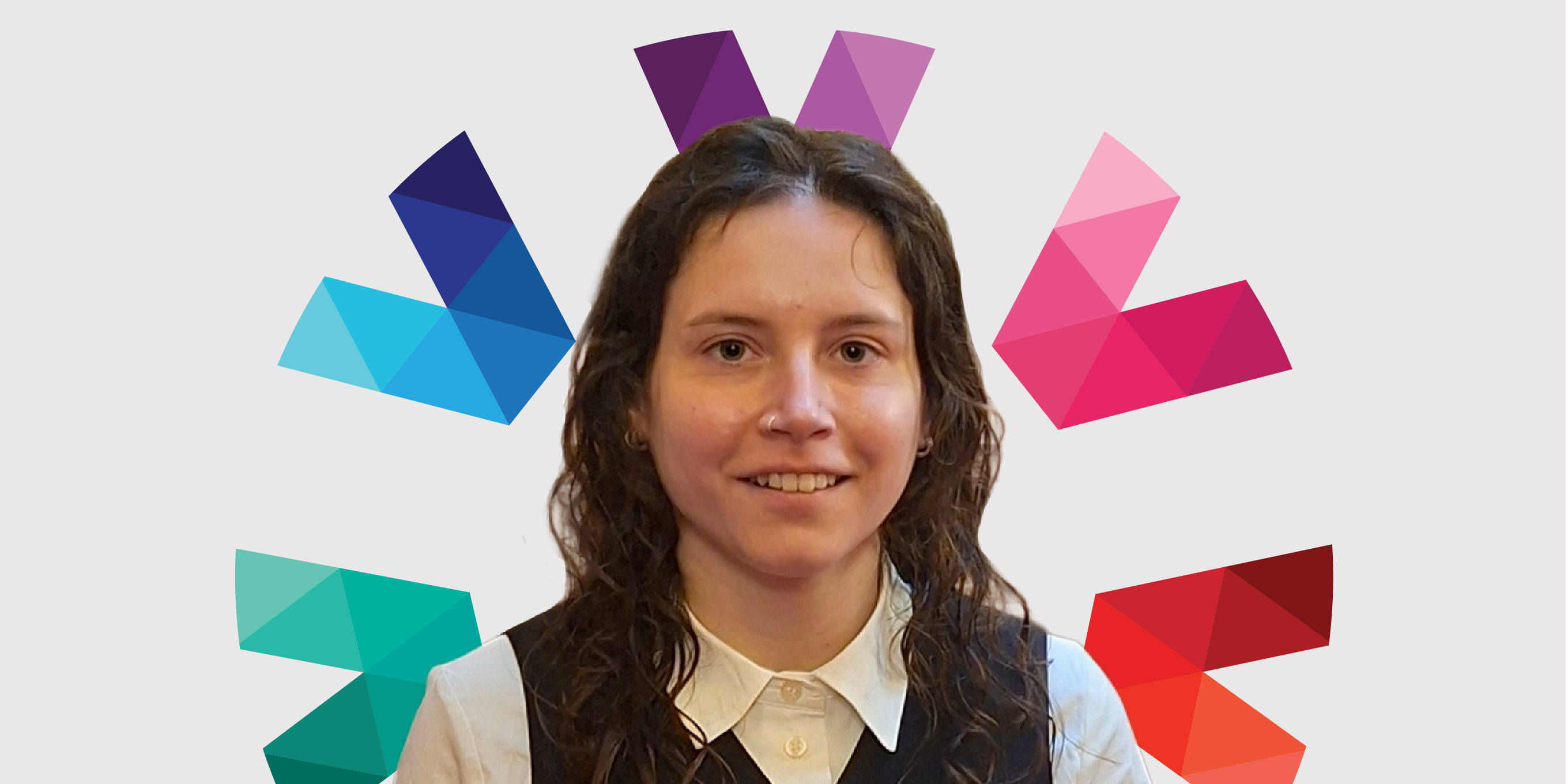
Why flexible learning matters: Ava McAuley on neurodiversity, agency and learner-centred education
Why flexible learning matters: Ava McAuley on neurodiversity, agency and learner-centred education
At ASDAN, we believe education should adapt to the learner, not the other way around. Through portfolio-based assessment and flexible timeframes for completion, ASDAN’s interested-led courses allow learners to progress in ways that work for them.
For autistic advocate, trainer and public speaker Ava McAuley, that principle was not just educational theory. It was the difference between repeatedly falling through the gaps in the system and finally finding a place where learning worked.
Today, Ava works with organisations across education, healthcare and business to improve understanding of neurodiversity. Her advocacy is rooted in lived experience and determination to make education more inclusive for future learners.
“I’d experienced my own failures by different systems, whether that’s care, education or even health,” Ava explains. “I was being moved around a lot and I knew that I was different, but nowhere really understood.”
“I wanted to look at how I could create change to make sure people like me don’t go through the same things again, or at least try and minimise those failures.”
A system that didn’t meet the learner
Ava’s early experiences in mainstream education were shaped by a sense that the system was not designed for the way she learned.
“In reception there were 30 kids in my class. I was the only one who couldn’t relate to any of them,” she recalls. “I’d look at the other kids chatting and getting involved and think: why can’t I do that?”
“I kept getting sent out of the classroom and my mum would be told to come pick me up,” Ava says. “Which meant I wasn’t really participating in education.”
Eventually, a teaching assistant recognised that something was not right and raised concerns with the school’s SENCO. After further assessment, Ava received an autism diagnosis and moved into a more suitable setting.
“When I was transferred from a mainstream setting into a school that could tailor things more to people like me, it was a massive relief,” she says, but even then her educational journey remained turbulent.
“I applied to about 30 different places across England,” Ava explains. “One place would say I was too able. Another would say my profile was too complex. There wasn’t a middle ground.”
A turning point: personalised, interest-led learning
Ava attended several secondary schools, including two residential schools before a breakthrough came when she secured a place at St John’s College in Brighton. For the first time, education began with a different question: what does this learner need?
During her time there, Ava completed courses in peer mentoring, English, and supporting teaching and learning in schools. She also gained practical experience through placements.
“I did a lot of peer mentoring in SEND provisions as part of my learning with St John’s College,” she says. “That’s where I started getting really interested in education and the systems around it.”
Crucially, the learning environment was flexible and responsive.
“They tailored everything around me,” Ava explains. “They even changed my timetable several times in the first year because it didn’t have anything I was interested in."
Having a voice in shaping her own pathway helped Ava build confidence.
“At one point they asked me what course I wanted to do,” she says. “So I looked through loads of different options and chose the one that matched the units I was interested in.”
The impact was significant.
“Because it was so focused on my skill set and my interests, I went further than even I imagined,” Ava says. “I was quite stunned by the time I left there, and so were a lot of people.”
This personalised approach reflects ASDAN’s learner-centred pedagogy. ASDAN offers a wide range of courses from pre-Entry to Level 3.
From our Peer Mentoring Short Course to our Personal Effectiveness Qualifications, all courses focus on developing real-world capabilities and offer a skills-based curriculum built around six core skills (learning, communicating, team working, decision making, self awareness and thinking).
Ava’s experience reinforced a principle at ASDAN’s heart and one that Ava now champions in her advocacy work:
“Education should be about making the courses fit people, not just making people fit the courses.”
The value of portfolio-based assessment
Another key difference in Ava’s experience was the use of portfolio-based assessment rather than exams, a framework at the core of all ASDAN courses.
Rather than relying solely on high-pressure exams, portfolio assessment allows learners to demonstrate their progress over time through evidence such as projects, practical tasks, reflection and real-world experiences.
For Ava, this approach made learning more accessible.
“What’s better about portfolio-based learning is that you can adapt it to suit the learner,” she says. “You can do it in different ways and at different timings that work for that person.”
“If you go into an exam, you’re putting every student (both neurotypical and neurodiverse) under the same system,” Ava explains. “But their learning capacity, timings and development needs don’t all meet the same criteria.”
ASDAN’s portfolio model recognises that learners develop at different speeds and show their strengths in different ways. By removing the pressure of exams and allowing flexible completion times, learners can demonstrate their abilities through practical achievements.
“You’re still using the same expectations,” Ava says. “You’re just doing it in a way that they’re able to learn it, and that creates fairness.”
From learner to advocate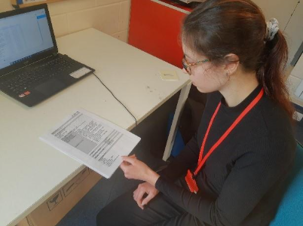
Today Ava works with organisations to improve understanding of autism and neurodiversity.
“Now I work mainly with organisations to give real insight to create more awareness and turn that awareness into real impact,” she explains.
A key part of that work involves challenging deficit-based views of neurodivergent learners.
“It’s about moving away from the mindset that neurodivergent people aren’t capable,” Ava says. “We should be seeing neurodiversity as potential rather than as a deficit.”
Her message to learners is equally clear.
“I know it can be hard to speak up,” she says. “But the more of us that come together as a collective, the more power we have for change.”
“Go out there and prove people wrong. If someone thinks you can’t do something, show them that you can.”
Learn more about ASDAN’s six core skills and get in touch with an education expert to discuss how our courses can benefit your learners.